IT · Italiano
Impianti completi per la trasformazione di latte vaccino e bevande vegetali (mandorla, riso) e per la produzione di formaggi.
Linea di prodotto · Lattiero-caseario
Linee complete per latte fresco, UHT, yogurt e formaggi: ricevimento, standardizzazione, pastorizzazione, omogeneizzazione, caseificazione e riempimento.
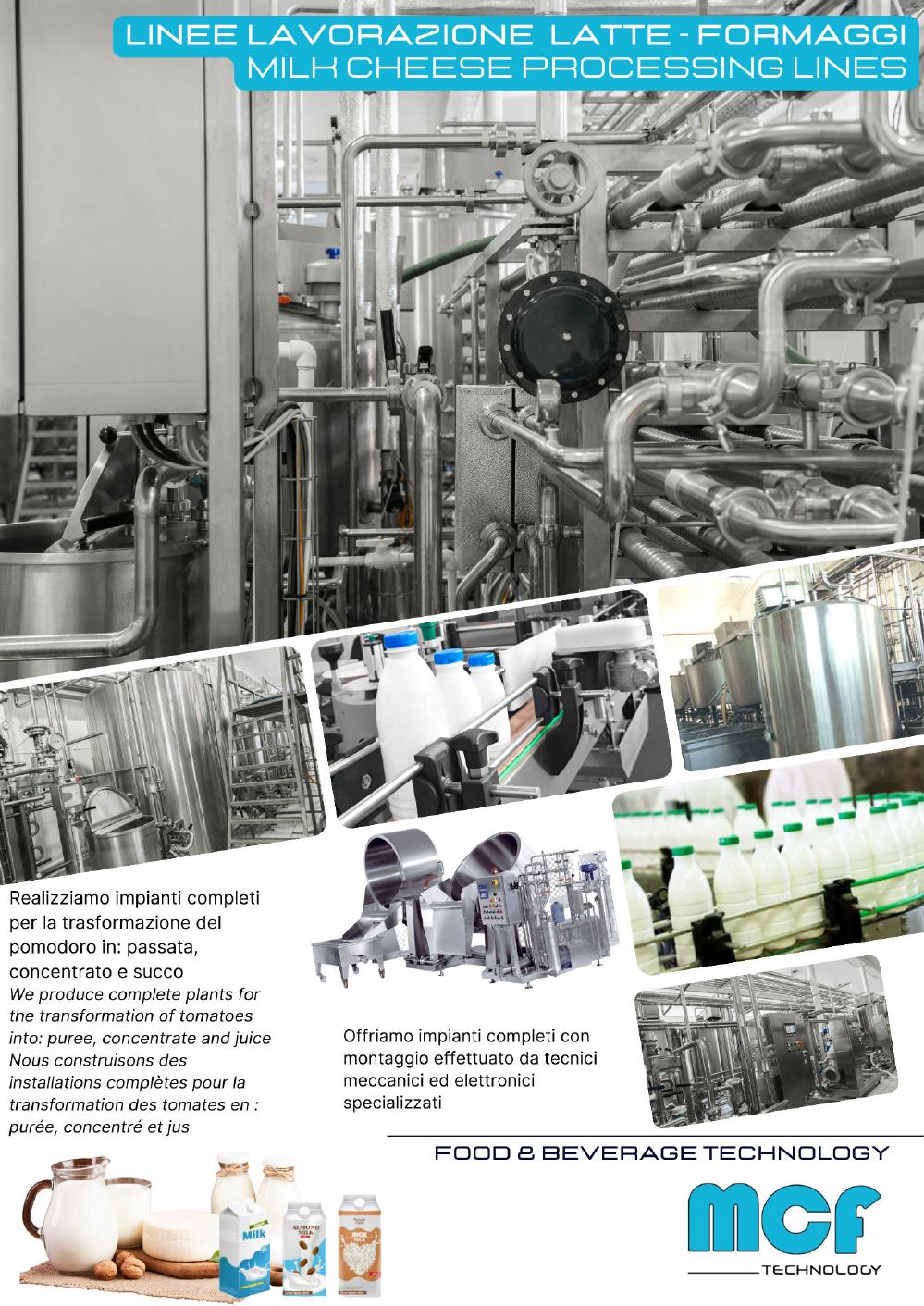
Impianto latte e derivati: pastorizzazione, omogeneizzazione e riempimento asettico per bevande lattiero-casearie e vegetali.
UHT milk processing plant and cheese production line — pasteuriser, homogeniser and aseptic filling for dairy and plant-based drinks.
Milch- und Käseanlage: Pasteurisierung, Homogenisierung und aseptische Abfüllung von Milch- und Pflanzendrinks.
Estratta dalla brochure ufficiale MCF Technology “Food & Beverage Technology”. Scheda dedicata su richiesta — riceverai la sezione della brochure aggiornata all'ultima release.
Prodotti finiti / contenitori
Accessori & schede tecniche · Documentazione IT
PDF trilingue (IT · EN · FR). Per accessori, ricambi e schede componenti dedicate, richiedi la documentazione IT estesa: risposta entro 24 h lavorative.
IT · Italiano
Impianti completi per la trasformazione di latte vaccino e bevande vegetali (mandorla, riso) e per la produzione di formaggi.
EN · English
Turnkey UHT milk processing plant, plant-based drink line (almond, rice) and cheese production equipment with industrial pasteurizer and homogenizer.
Testi verbatim dalla brochure ufficiale MCF Technology “Food & Beverage Technology” — nessuna claim inventata in fase di progettazione.
Flusso operativo · 5 stazioni
Latte crudo → UHT, bevande vegetali e formaggi: macchine nominate stazione per stazione e valori di resa lungo tutta la linea, dalla materia prima al prodotto finito.
Macchine
Valori indicativi
Macchine
Valori indicativi
Macchine
Valori indicativi
Macchine
Valori indicativi
Il siero è recuperabile in linea ricotta o in impianto di ultrafiltrazione per concentrati proteici.
Macchine
Valori indicativi
Valori di resa e portata indicativi, tipici della tecnologia impiegata: vengono confermati nel bilancio di massa dello studio di fattibilità sulla base della materia prima reale e del prodotto finito richiesto.
PDF con process-flow, macchine nominate, controlli qualità e avvertenze sui valori indicativi.
EN · Compare configurations
Benchmark 3 tiers before requesting a quote
UHT milk processing plants and cheese production lines with industrial pasteurizer, homogenizer and aseptic filling machine.
Fresh dairy & artisan cheese
ESL & UHT dairy
Export UHT plant
Ranges reflect the MCF Technology brochure envelope. Final capacity, formats and automation are engineered on the buyer's product, utilities and site conditions.
Un unico interlocutore dallo studio di fattibilità all'assistenza post-vendita. La linea linee di lavorazione latte e formaggi è consegnata chiavi in mano con questo scope.
Dettagli tecnici
Intervalli tipici di configurazione, non prestazioni contrattuali: capacità, formati, materiali a contatto e utilities vengono fissati in offerta dopo il dimensionamento e le prove di resa sul prodotto reale. Prezzo su richiesta.
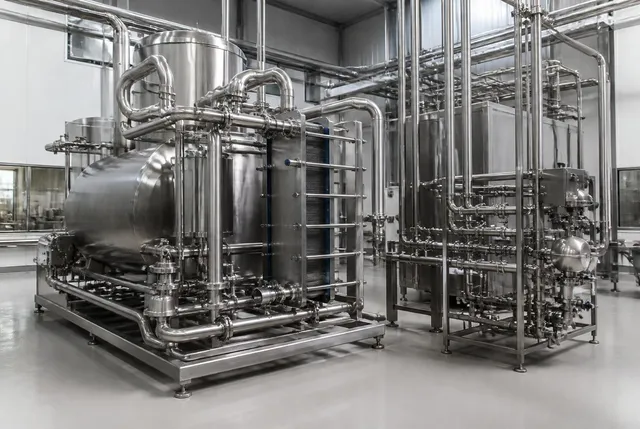
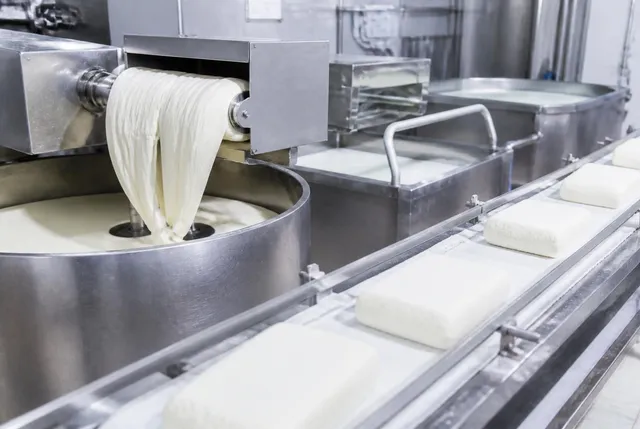
Installazione e gestione
Sequenza operativa che MCF Technology segue per installare, collaudare e avviare la linee di lavorazione latte e formaggi, fino alla gestione quotidiana e alla manutenzione programmata. Consegna, montaggio e assistenza on-site sono inclusi in tutto il mondo.
Durata indicativa complessiva: circa 36 giorni lavorativi on-site.
Sopralluogo tecnico sul layout della linee di lavorazione latte e formaggi: quote di passaggio, pavimentazione e scarichi, spazi di manutenzione e disponibilità di vapore per pastorizzazione, acqua ghiacciata, aria compressa alimentare e scarico caseario. Si consegna la lista definitiva dei predisposizioni a carico del cliente.
Consegna worldwide con imballo per trasporto marittimo o su gomma, scarico e posizionamento dei moduli (Ricevimento latte, deaeratore, scrematrice e standardizzazione, Pastorizzatore a piastre e omogeneizzatore, Polivalenti di coagulazione, filatrici, presse e salamoia) sulle piazzole previste dal layout, con controllo del packing list e dello stato dei componenti.
Assemblaggio dei gruppi, allineamento dei trasporti, saldature igieniche della tubistica in acciaio inox e installazione di valvole e strumenti secondo P&ID, con supervisione dei tecnici MCF Technology on-site.
Collegamento di vapore per pastorizzazione, acqua ghiacciata, aria compressa alimentare e scarico caseario, cablaggio del quadro elettrico e del PLC, messa a terra, configurazione dell'HMI e delle ricette di processo per i formati previsti (Latte, Bevande vegetali, Formaggi).
Lavaggio e passivazione delle superfici a contatto, verifica dei circuiti CIP con controllo di portata, temperatura e concentrazione detergente, prove di tenuta e cicli a vuoto di tutti i moduli.
test di pastorizzazione con registrazione della curva termica, prova di tenuta delle valvole di deviazione flusso e prova di caseificazione. Le prove si eseguono con il prodotto reale del cliente e vengono registrate nel rapporto di collaudo.
Avviamento assistito con produzione in continuo, addestramento di conduttori e manutentori su HMI, cambio formato, sicurezza e sanificazione, consegna di manuali e schemi in lingua concordata.
Conduzione quotidiana con controllo temperatura e tempo di sosta in pastorizzazione, pH cagliata, resa e temperatura di stoccaggio. Manutenzione programmata: ispezione piastre dello scambiatore, taratura sonde e verifica valvole di sicurezza igienica. Assistenza on-site e remota con ricambi critici concordati in offerta.
Tempi e attività sono indicativi: il piano di montaggio, collaudo e formazione viene definito in offerta dopo il rilievo del sito e il dimensionamento della linea. Nessun valore è una prestazione contrattuale.
Installation & operation
The operating sequence MCF Technology follows to install, commission and start up the uht milk processing plant & cheese production line, through to daily operation and planned maintenance. Delivery, erection and on-site service are included worldwide.
Indicative total duration: about 36 working days on site.
Technical survey on the layout of the uht milk processing plant & cheese production line: passage heights, flooring and drains, maintenance clearances and availability of steam for pasteurisation, chilled water, food-grade compressed air and a dairy drain. The final list of customer-side preparations is handed over.
Worldwide delivery with sea-freight or road packing, unloading and positioning of the modules (Ricevimento latte, deaeratore, scrematrice e standardizzazione, Pastorizzatore a piastre e omogeneizzatore, Polivalenti di coagulazione, filatrici, presse e salamoia) on the areas foreseen by the layout, checking the packing list and the condition of the components.
Assembly of the units, conveyor alignment, hygienic welding of the stainless-steel piping and installation of valves and instruments according to the P&ID, supervised on site by MCF Technology technicians.
Connection of steam for pasteurisation, chilled water, food-grade compressed air and a dairy drain, wiring of the electrical cabinet and PLC, earthing, HMI configuration and process recipes for the planned formats (Latte, Bevande vegetali, Formaggi).
Washing and passivation of the product-contact surfaces, CIP circuit verification with flow, temperature and detergent-concentration control, tightness tests and dry-run cycles on all modules.
pasteurisation test with recorded thermal curve, flow-diversion valve tightness test and cheese-making trial. Trials are run with the customer's real product and recorded in the commissioning report.
Assisted start-up with continuous production, training of operators and maintenance staff on HMI, format changeover, safety and sanitation, handover of manuals and drawings in the agreed language.
Daily operation with pasteurisation temperature and holding time, curd pH, yield and storage temperature. Planned maintenance: heat-exchanger plate inspection, probe calibration and hygienic safety-valve checks. On-site and remote service with critical spare parts agreed in the quotation.
Durations and activities are indicative: the erection, commissioning and training plan is defined in the quotation after the site survey and line sizing. No figure is a contractual performance.
Mercati serviti
Per ogni mercato una pagina dedicata con porti di sbarco, parametri di rete, documenti d'importazione e assistenza in loco.
Tutte le combinazioni impianto × mercatoAtti ufficiali UE e standard Codex Alimentarius applicabili al prodotto e all'impianto. Fuori dall'UE si applicano le norme del Paese di destinazione.
FAQ · Italiano
Risposte tecniche per buyer e progettisti che valutano linee di lavorazione latte e formaggi — progettazione MCF Technology & SGE Italy, installazione in tutto il mondo.
L'UHT diretto inietta vapore saturo nel latte a 142–145 °C per meno di un secondo (migliore ritenzione sensoriale); l'UHT indiretto usa scambiatore tubolare o a piastre (minore costo operativo). MCF fornisce entrambe le configurazioni.
Sì, purché il CIP sia progettato per il changeover completo degli allergeni e l'omogeneizzatore sia certificato per entrambe le famiglie. Configurazioni tipiche processano latte vaccino, mandorla, riso, avena e soia sulla stessa linea.
150–250 bar in due stadi per latte UHT intero; 200–300 bar per bevande vegetali per stabilizzare l'emulsione e prevenire la sedimentazione.
Sì — polivalenti, formatura, salamoia e linee di stagionatura sono integrate quando il cliente vuole un caseificio completo attorno allo stesso pastorizzatore industriale.
Bottiglie PET (fino a 2 L), brik (200 mL, 500 mL, 1 L), pouch asettici e bag-in-box per foodservice. Il riempitore asettico condivide lo stesso tank di stoccaggio asettico.
9–14 mesi dall'ordine fino all'avviamento a caldo, in funzione dello scope, dei formati di packaging e del paese di destinazione.
9–14 mesi dal purchase order al collaudo a caldo con latte reale, in funzione del formato di packaging (PET, brik, bag-in-box), del numero di riempitrici asettiche e delle utility di stabilimento. Il pastore/UHT skid è validato in FAT con acqua sterile in Italia prima della spedizione.
Contratto di service annuale con audit di prestazione, kit ricambi critici per riempitrice asettica (valvole steam-barrier, guarnizioni, ugelli), teleassistenza sul SCADA e SLA on-site 72 h in tutto il mondo. MTBF garantito >2.500 h sulle riempitrici brik e PET.
Con mix latte UHT + drink vegetali, il payback tipico è 4–6 anni con EBITDA 12–18% in base al prezzo latte crudo e al mercato di sbocco. MCF fornisce il simulatore ROI a 6 anni e affianca il buyer nella scelta tra leasing operativo, credito 4.0 e SACE.
FAQ · Deutsch
Technische Antworten für Einkäufer und Ingenieure zur uht milk processing plant & cheese production line — Engineering MCF Technology & SGE Italy, Installation weltweit.
Direktes UHT injiziert Sattdampf bei 142–145 °C für weniger als eine Sekunde (beste sensorische Erhaltung); indirektes UHT nutzt Rohrbündel- oder Plattenwärmetauscher (niedrigere Betriebskosten). MCF liefert beide Konfigurationen.
Ja, sofern die CIP für vollen Allergen-Wechsel ausgelegt ist und der Homogenisator für beide Produktfamilien zertifiziert ist. Typische Setups verarbeiten Kuhmilch, Mandel, Reis, Hafer und Soja auf derselben Linie.
150–250 bar zweistufig für Vollmilch UHT; 200–300 bar für Pflanzendrinks zur Stabilisierung der Emulsion und Vermeidung von Sedimentation.
Ja — Käsefertiger, Formung, Salzbad und Reifelinien werden integriert, wenn der Kunde eine komplette Molkerei um denselben Pasteur benötigt.
PET-Flaschen (bis 2 L), Brik-Kartons (200 mL, 500 mL, 1 L), aseptische Beutel und Bag-in-Box für Foodservice. Der aseptische Füller teilt sich denselben Puffertank.
9–14 Monate ab Bestellung bis zur Heiß-Inbetriebnahme, abhängig von Umfang, Packungsformaten und Zielland.
9–14 Monate ab Bestellung bis zur Heiß-Inbetriebnahme mit echter Milch, abhängig von Packformat (PET, Brik, Bag-in-Box), Anzahl aseptischer Abfüllmaschinen und Werks-Utilities. Der Pasteur/UHT-Skid wird in Italien mit Sterilwasser FAT-validiert vor Versand.
Jährlicher Servicevertrag mit Leistungs-Audit, Kit kritischer Ersatzteile für die aseptische Abfüllmaschine (Dampfsperrventile, Dichtungen, Düsen), Remote-SCADA-Support und 72-h-Vor-Ort-SLA weltweit. Garantierter MTBF >2.500 h an Brik- und PET-Aseptikfüllern.
Mit UHT-Milch + Pflanzendrink-Mix liegt der Payback typisch bei 4–6 Jahren mit 12–18 % EBITDA je nach Rohmilchpreis und Exportmarkt. MCF liefert den 6-Jahres-ROI-Simulator und begleitet den Käufer bei der Wahl zwischen Operating-Leasing, Industrie-4.0-Steuergutschrift und SACE-Exportkredit.
FAQ · English
Technical answers for buyers researching uht milk processing plant & cheese production line — engineered by MCF Technology & SGE Italy, installed worldwide.
Direct UHT injects saturated steam into the milk at 142–145 °C for less than a second (best sensory retention); indirect UHT uses a tubular or plate heat exchanger (lower operating cost). MCF supplies both configurations.
Yes, provided the CIP is designed for full allergen changeover and the industrial homogenizer is certified for both product families. Typical setups process cow milk, almond, rice, oat and soy drinks on the same line.
150–250 bar in two stages for whole UHT milk; 200–300 bar for plant-based drinks to stabilize the emulsion and prevent sedimentation.
Yes — cheese vats, moulding, brining and ripening lines are integrated when the customer needs a full dairy factory around the same industrial pasteurizer.
PET bottles (up to 2 L), brik cartons (200 mL, 500 mL, 1 L), aseptic pouch and bag-in-box for foodservice. The aseptic filler shares the same aseptic buffer tank.
9–14 months from purchase order to hot commissioning, depending on scope, packaging formats and destination country.
Request · English
Engineered by MCF Technology & SGE Italy. Delivery, installation and on-site service worldwide. Your work email is enough — an engineer replies personally within one business day.
Passo successivo
Ricevi lo studio di fattibilità con capacità obiettivo, bilancio di massa, CAPEX indicativo e dossier finanziario bancabile. Consegna e installazione on-site in tutto il mondo.